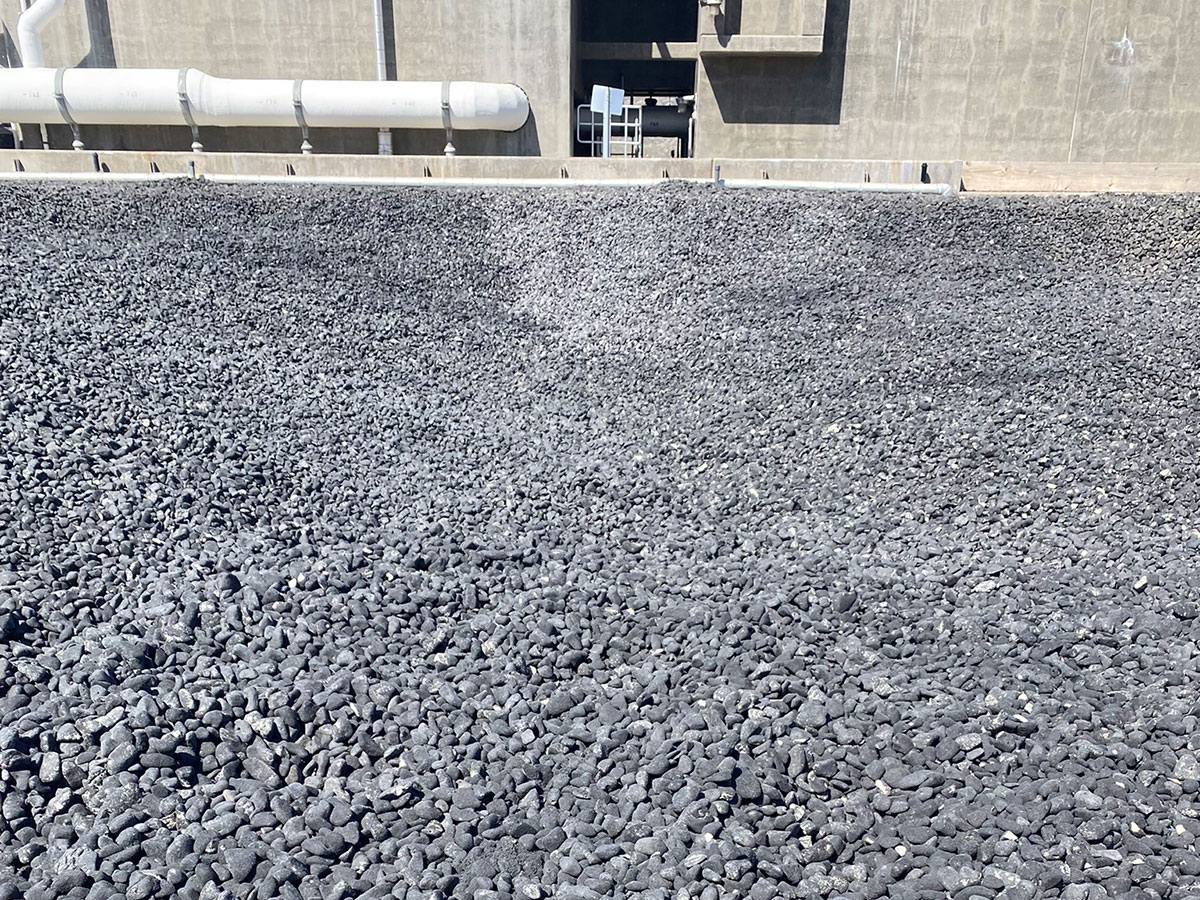
Long-term performance depends on sound engineering, healthy microbial populations, and properly selected media.
Municipal wastewater collection and treatment systems generate gaseous compounds as organic material decomposes under anaerobic conditions. These gases create nuisance odors, accelerate infrastructure corrosion, and can present occupational safety concerns.
Contaminants
Hydrogen sulfide is typically the primary design contaminant because of its extremely low odor threshold, corrosive nature, and toxicity at elevated concentrations. However, effective odor control systems must also address ammonia, mercaptans, VOCs, DMS, DMDS, and organic amines. Modern biological systems are designed to treat these contaminants continuously while maintaining low operating costs and high removal efficiencies.
Why Biological Odor Control?
Unlike chemical scrubbers that continuously consume reagents, biological systems rely on naturally occurring microorganisms that regenerate themselves.
Sulfur-oxidizing and heterotrophic bacteria convert contaminants into sulfate, carbon dioxide, water, and nitrate. Properly designed systems routinely achieve very high H2S removal while simultaneously treating many VOCs and ammonia.
Biofilters and Bioscrubbers
Biofilters pass contaminated air through a fixed engineered media bed where contaminants dissolve into a thin moisture film and are biologically oxidized.
Bio-Scrubbers® first absorb contaminants into a recirculating liquid stream before biological oxidation occurs on engineered packing media.
Both technologies depend on proper airflow, moisture, oxygen, nutrients, and media selection.
Why Media Matters
The media is the biological reactor. It provides structural support, interconnected pore space, moisture retention, airflow pathways, and microbial attachment sites. Stable engineered media maintain low pressure drop, resist acidic environments, and provide consistent biological performance over many years. Media selection directly influences operating cost, maintenance frequency, and long-term reliability.
Organic Versus Engineered Media
Traditional organic media such as wood chips, bark, and compost support microbial growth but gradually decompose, compact, and increase airflow resistance.
Engineered mineral and recycled-glass media are designed to maintain their physical properties, preserve airflow, resist biological degradation, and reduce replacement frequency, lowering life-cycle costs.
Selecting the Right Media
Media selection should consider contaminant type, airflow, EBRT, moisture management strategy, pressure-drop limitations, nutrient delivery, service life, and total life-cycle cost rather than initial purchase price alone.
Successful biological odor control depends on the interaction of microorganisms, moisture, airflow, nutrients, and media. While microorganisms perform the biological oxidation, engineered media create the environment that allows those microorganisms to thrive. Proper media selection helps maximize treatment efficiency while reducing maintenance, fan energy, and long-term operating costs.
GES Biotek Engineered Media Solutions
GES Biotek has developed a family of engineered media for municipal wastewater and industrial biological odor control systems. Each product is designed to provide long-term structural stability, consistent airflow, excellent moisture management, and an optimal environment for microbial growth.
Why GES Biotek?
- Nearly 30 years serving the industry
- >3 million cubic feet of engineered media supplied
- Hundreds of municipal and industrial installations across North America
- Complete odor-control ecosystem solutions
- U.S.-manufactured engineered media
- Engineering support from design through startups
- 20-year prorated warranty on engineered inorganic media
Benefits of GES Engineered Media
- Structural integrity over long service life
- Resists biological decomposition and acidic operating conditions
- Stable pressure drop and uniform airflow
- Rapid microbial colonization
- Reduced maintenance and media replacement frequency
- New installation and retrofit project suitability
Core Technologies
- Engineered inorganic biofilter media
- Organic biofilter media
- Bio-Scrubber® systems
- Biofilters
- Air distribution flooring
- Moisture retention systems
- Nutrient delivery systems
- Startup, commissioning, testing, and training
Product Portfolio
Engineering Services
- Process design assistance
- Media selection
- EBRT analysis
- Pressure drops calculations
- Startup assistance
- Performance testing
- Smoke testing
- Operator training
- Lifecycle support
Markets Served
- Municipal wastewater
- Industrial wastewater
- Food & beverage
- Rendering
- Pulp & paper
- Landfills
- Pump stations
- Chemical processing
Performance Advantages
- Stable pressure drops
- No media compaction
- High airflow
- Excellent moisture retention
- Acid resistance
- High crush strength
- Long service life
- Reduced lifecycle costs
Sustainability
- 100% recycled glass
- Natural biological treatment
- Low chemical consumption
- Build America, Buy America compliant products